Best Recovery Suits & Calming Vests for Dogs (2026)
Updated 2026 · 11 min read · 6 products reviewed
Affiliate Disclosure: PawCraftDen is reader-supported. As an Amazon Associate, we earn from qualifying purchases at no extra cost to you.
Recovery suits and calming vests solve two different problems that pet owners often confuse: one protects healing skin after surgery, while the other applies gentle, consistent pressure to ease anxiety during stressful situations like storms or travel. Choosing the wrong category can mean a dog left without proper incision protection after a spay or neuter, or an anxious dog handed a recovery suit that does nothing for their nervous system. The ASPCA's dog behavior resources note that anxiety-related behaviors often respond well to pressure-based tools alongside behavioral approaches, while post-operative care is a separate, medically driven need best guided by your veterinarian's specific recovery instructions. This guide walks through sizing, fabric choice, safety, and how to tell which category your dog actually needs.
| Product | Best For | Key Feature | Top Con | Link |
|---|---|---|---|---|
| Kuoser Recovery Suit for Dogs After Surgery | Best Overall Recovery Suit | Full-body coverage with snap closures | Sizing runs small for barrel-chested breeds | Jump to → |
| FUAMEY Recovery Suit Soft Breathable Dog Bodysuit | Best for Sensitive Skin | Soft cotton-blend gentle on healing skin | Less structured fit than premium suits | Jump to → |
| ThunderShirt for Dogs Medium Fuchsia Sport Calming Vest | Best Calming Vest | Constant gentle pressure for anxiety relief | Not for post-surgical incision protection | Jump to → |
| BellyGuard Dog Surgery Recovery Suit Post-Op | Best for Female Dogs | Cut specifically for female anatomy | Not optimized for male anatomy | Jump to → |
| ThunderShirt for Dogs XX Small Heather Gray Classic | Best for Small Dogs | Sized specifically for very small breeds | Limited sizing flexibility outside XXS | Jump to → |
| Surgi Snuggly Dog Surgery Recovery Suit Double Blue Large | Best for Large Dogs | Generous cut for large-breed proportions | Bulkier fit than form-fitting alternatives | Jump to → |
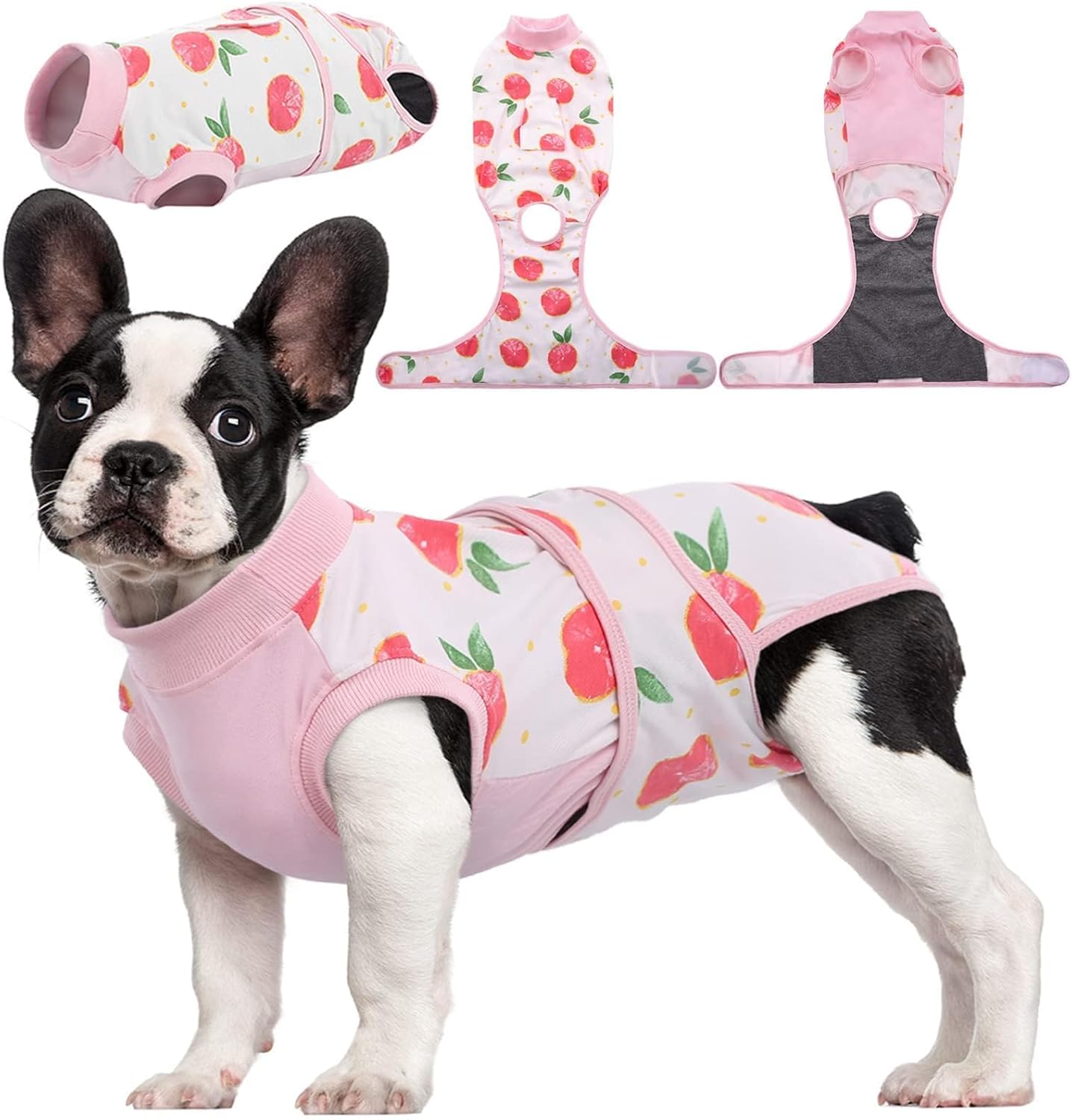
Kuoser Recovery Suit for Dogs After Surgery
A full-coverage post-surgery suit that protects incisions while letting dogs move comfortably.
Considerations
- Sizing runs slightly small for barrel-chested breeds
- Needs daily washing during the recovery window
- Full-body coverage protects incision sites
- Breathable fabric prevents overheating
- Snap closures simplify bathroom breaks
- Substitutes for an E-collar in many cases

FUAMEY Recovery Suit Soft Breathable Dog Bodysuit
A soft cotton-blend bodysuit suited to dogs with sensitive or irritated post-op skin.
Considerations
- Less structured fit than premium recovery suits
- May need a smaller size for a truly snug fit
- Soft fabric is gentle on healing skin
- Lightweight enough for warmer climates
- Easy step-in design
- Covers common abdominal incision areas

ThunderShirt for Dogs Medium Fuchsia Sport Calming Vest
A gentle, constant-pressure wrap that helps anxious dogs settle during storms, travel, or vet visits.
Considerations
- Effectiveness varies by individual dog
- Not designed for post-surgical incision protection
- Gentle pressure mimics swaddling for anxiety relief
- Lightweight sport fabric breathes well
- Simple wrap-and-secure design
- Machine washable

BellyGuard Dog Surgery Recovery Suit Post-Op
A suit designed with female anatomy in mind for cleaner coverage after spay surgery.
Considerations
- Not optimized for male dog anatomy
- Fabric can feel warm in summer months
- Cut specifically to suit female anatomy
- Reinforced belly panel adds extra protection
- Adjustable leg openings
- Easy on-off snap system

ThunderShirt for Dogs XX Small Heather Gray Classic
A scaled-down classic calming wrap sized for toy and extra-small breeds.
Considerations
- Limited sizing flexibility outside XXS frames
- Only offered in muted color options
- Sized specifically for very small dogs
- Classic fabric is breathable and soft
- Easy hook-and-loop closure
- Machine washable

Surgi Snuggly Dog Surgery Recovery Suit Double Blue Large
A roomier recovery suit cut for large-breed torsos without sacrificing incision protection.
Considerations
- Bulkier fit than form-fitting alternatives
- Best paired with a cone for the first 24 hours post-op
- Generous cut suits large-breed proportions
- Works for both male and female anatomy
- Durable stitching withstands daily wear
- Multiple snap points for adjustment
Buying Guide
Recovery suits and calming vests share a similar form factor — both wrap around a dog's torso — but they're built for distinct purposes, and that distinction should drive your purchase decision more than any other factor. Below we cover sizing and fit, fabric and durability, safety considerations specific to post-surgical use, and how to decide between a recovery suit and a calming vest based on your dog's actual situation.
Sizing and Fit
Fit matters more for recovery suits and calming vests than almost any other category of dog gear, because both rely on close, even contact with the body to function properly. A recovery suit that's too loose can shift out of place and expose an incision site, while one that's too tight can restrict movement or irritate healing skin at the edges of the fabric. Most recovery suits use adjustable snap closures along the back and legs specifically so you can fine-tune the fit as swelling changes during the first days of recovery, and it's worth checking those adjustment points before committing to a size based on weight charts alone.
Body shape matters as much as weight here. Barrel-chested breeds often need to size up from a standard chart-based recommendation to avoid a suit that's snug around the chest but loose everywhere else, while leaner, narrow-bodied breeds may need a smaller size than their weight suggests to get a fit close enough to actually protect an incision. Suits cut specifically for female anatomy with reinforced belly panels fit differently than those designed for general or male anatomy, so check the product's intended fit description rather than assuming all recovery suits are interchangeable across sexes.
Calming vests follow a similar logic but with different stakes — a poor fit mainly means reduced effectiveness rather than exposed incisions. The pressure mechanism that calming wraps rely on, similar in concept to swaddling, only works if the wrap sits snugly without being so tight that it restricts breathing or movement. Extra-small sizes built specifically for toy breeds fit meaningfully differently than a scaled-down version of a medium-size wrap, so look for sizing designed around the small end of the spectrum rather than the smallest size in a single broad size run.
Tip: For post-surgical suits, recheck the fit daily during the first week of recovery — swelling typically decreases as healing progresses, and a suit that fit snugly on day one may need to be tightened by day four or five.
Fabric and Durability
Fabric choice affects comfort, healing, and how often you'll need to wash and re-wear the same suit during a recovery period that can last one to two weeks or longer. Breathable fabrics that allow airflow help prevent overheating, particularly important since post-surgical dogs are often less active and more prone to lying in one spot for extended periods, which can trap heat against the skin if fabric doesn't breathe well. Soft cotton-blend materials are generally gentler against healing or irritated skin than synthetic alternatives, making them a better choice for dogs prone to sensitivity or for incision sites still actively healing.
Durability matters differently for recovery suits than for calming vests. Recovery suits see heavy daily wear during a defined recovery window and need to survive frequent washing, since hygiene around a healing incision is non-negotiable — most suits in this category are machine washable for exactly this reason. Calming vests, by contrast, often see more occasional and situational use — a storm, a car ride, a vet visit — so while durability still matters, the wash frequency demands are typically lower than what a post-surgical suit endures.
Construction quality, including reinforced stitching at stress points and durable snap hardware that won't pop open under normal movement, separates suits that hold up through a full recovery period from those that need replacing partway through. For larger and giant breeds, look specifically for suits described as cut for large-breed proportions with multiple adjustable snap points, since standard mid-size cuts often run too short in the torso for big dogs even when the weight range technically matches.
Tip: Keep a backup suit on hand during recovery so you always have a clean one available while the other is being washed — this matters most in the first few days when accidents or minor incision drainage are more common.
Safety for Post-Surgical Use
Recovery suits are frequently used as an alternative to the traditional E-collar, and for many dogs this is a meaningful comfort upgrade, since suits don't interfere with eating, drinking, or navigating around furniture the way a rigid plastic cone can. However, suits only work as an effective alternative if they actually prevent the dog from reaching the incision site with their mouth — for very flexible dogs or those especially determined to lick at a wound, a suit alone may not be sufficient and should be combined with supervision or, if needed, an E-collar during unsupervised periods.
Always check the incision site at each suit change for unusual redness, swelling, discharge, or odor that wasn't present at the time of surgery, since a suit can sometimes obscure early signs of infection if you're not deliberately checking underneath. The AVMA's post-operative pet care guidance recommends following your veterinarian's specific aftercare instructions closely, including any restrictions on activity level, regardless of which recovery garment you use, since the suit itself doesn't replace proper wound monitoring.
Snap closures, while convenient for bathroom breaks, should be checked regularly to ensure they remain secure throughout the day, particularly for active dogs or those who roll and stretch frequently as they start feeling better during recovery. A suit that pops open unnoticed defeats its protective purpose, so a quick visual check after any period of activity is a reasonable habit during the recovery window.
Choosing Between Recovery Suits and Calming Vests
The clearest way to decide between these two categories is to identify the actual problem you're solving. If your dog has had or is scheduled for surgery — spay, neuter, or another soft-tissue procedure — a recovery suit with appropriate belly and torso coverage is the right tool, chosen based on your dog's sex-specific anatomy and size. If instead your dog shows anxiety symptoms during specific triggers like thunderstorms, fireworks, vet visits, or travel, a calming vest using gentle constant pressure is the more appropriate choice, and it's worth noting that effectiveness varies meaningfully between individual dogs, so realistic expectations help avoid disappointment.
Some situations call for both, in sequence rather than simultaneously — a dog recovering from surgery who also experiences anxiety from the unfamiliar sensation of wearing a suit might benefit from a brief calming vest introduction before transitioning to the recovery suit, though the two garments serve different functions and generally shouldn't be worn layered together given the bulk and heat retention involved.
After a procedure, many owners also reconsider broader home setup — a supportive dog bed with easy-access low sides helps a recovering dog rest comfortably without needing to climb, and the right crate sized appropriately can support enforced rest periods that many post-surgical recovery plans require. If your dog also struggles with dental hygiene during reduced activity, mild dental care chews can help maintain oral health without requiring extra physical exertion.
Whichever category fits your situation, prioritize proper fit and fabric quality over any other feature — both directly affect whether the product actually does its job, whether that's protecting a healing incision or providing the calming pressure an anxious dog needs to settle down.
Frequently Asked Questions
A recovery suit protects healing incision sites after surgery and typically offers full-body coverage with snap closures, while a calming vest uses gentle constant pressure to ease anxiety during stressful situations like storms or travel. They serve different purposes and aren't interchangeable.
Further Reading
Affiliate Disclosure: Links on this page may earn PawCraftDen a commission as an Amazon Associate.