Best Dog Chews & Dental Care Treats for Healthy Teeth (2026)
Updated 2026 · 10 min read · 6 products reviewed
Affiliate Disclosure: PawCraftDen is reader-supported. As an Amazon Associate, we earn from qualifying purchases at no extra cost to you.
A daily chew session does double duty: it satisfies a dog's instinctive need to gnaw and it helps scrape soft plaque off teeth before it hardens into tartar. Bully sticks remain one of the most widely recommended single-ingredient chews because they're digestible, long-lasting, and free of the artificial binders found in many rawhide alternatives. The right pick depends on your dog's size, chewing intensity, and whether odor control matters in your home. According to the ASPCA's guidance on dog behavior, appropriate chewing outlets also reduce destructive habits directed at furniture and shoes. Below we compare six well-reviewed bully stick options and walk through how to choose safely.
| Product | Best For | Key Feature | Top Con | Link |
|---|---|---|---|---|
| Natural Farm Bully Sticks Odor-Free 6 Inch 12oz | Best Overall Daily Chew | Single-ingredient, odor-free processing | Pricier per stick than rawhide | Jump to → |
| Mighty Paw Long Lasting 12 Inch Bully Sticks | Best for Large Dogs | Extra-long 12-inch length | Too large for toy/small breeds | Jump to → |
| Best Bully Sticks 4 Inch Natural Grass-Fed 8oz | Best for Small Dogs | Grass-fed, shorter 4-inch size | Doesn't last as long for big dogs | Jump to → |
| Redbarn Bully Sticks Variety Party Pack 8oz | Best Variety Pack | Assorted shapes keep dogs engaged | Inconsistent durability across shapes | Jump to → |
| Pawstruck Natural 8–12 Inch Bully Sticks 1lb Bag | Best Value Bulk Bag | 1lb bulk bag lowers cost per stick | Stick length varies piece to piece | Jump to → |
| Cowdog Chews Beef Bully Stick Odor-Free 10 Count | Best Odor-Free Pick | Odor-controlled processing, consistent sizing | Mid-range price vs bulk bags | Jump to → |

Natural Farm Bully Sticks Odor-Free 6 Inch 12oz
Single-ingredient odor-free bully sticks that satisfy chewing instincts while supporting dental health.
Considerations
- Pricier per stick than rawhide alternatives
- Strong chewers may finish faster than expected
- Single-ingredient, no additives
- Odor-free processing for indoor use
- Long-lasting chew time
- Supports natural teeth cleaning

Mighty Paw Long Lasting 12 Inch Bully Sticks
An extra-long bully stick sized to keep large, powerful chewers occupied longer.
Considerations
- Larger size means a higher price per piece
- Too large for toy or small breeds
- 12-inch length extends chew sessions
- High-protein, single-ingredient formula
- Reduces destructive chewing on furniture
- Free of grain and gluten
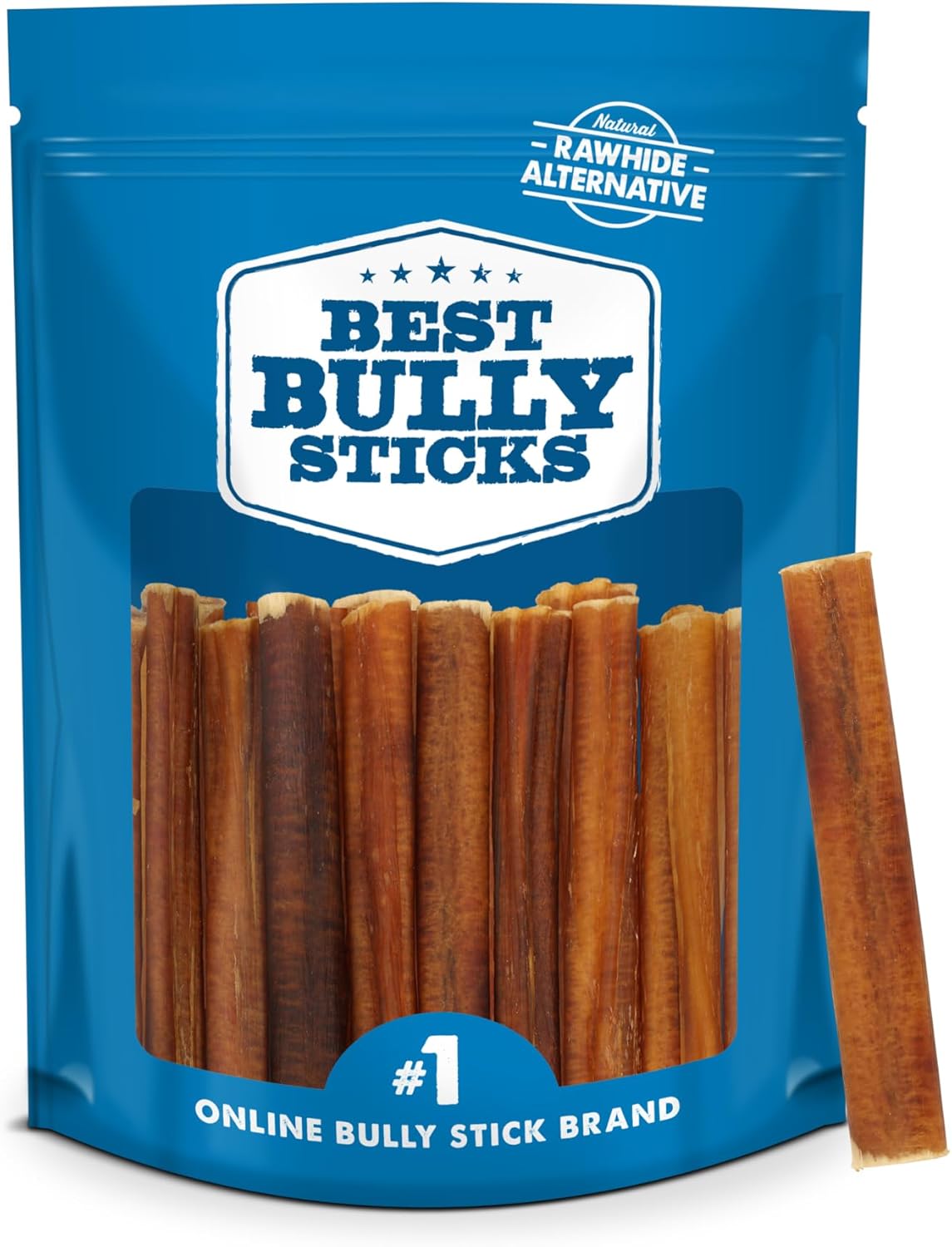
Best Bully Sticks 4 Inch Natural Grass-Fed 8oz
Shorter grass-fed bully sticks sized appropriately for small breeds and lighter chewers.
Considerations
- Shorter sticks don't last as long per session
- Not substantial enough for large dogs
- Grass-fed sourcing for a cleaner ingredient profile
- Shorter length fits small mouths comfortably
- Naturally low odor
- Easy to portion for training rewards

Redbarn Bully Sticks Variety Party Pack 8oz
An assorted multi-shape pack that adds variety to chew time across different textures.
Considerations
- Shapes vary in size, so durability is inconsistent
- Not ideal for dogs needing one specific size
- Mixed shapes keep chewing engaging
- Good value across multiple pieces
- Single-ingredient beef base
- Suitable for most adult dog sizes

Pawstruck Natural 8–12 Inch Bully Sticks 1lb Bag
A bulk-bag option that lowers the per-stick cost for households with multiple dogs.
Considerations
- Bag size means more storage space needed
- Stick length varies piece to piece
- Bulk bag lowers cost per stick
- Long 8-12 inch length per piece
- All-natural, single-ingredient formula
- Good for stocking up multi-dog homes

Cowdog Chews Beef Bully Stick Odor-Free 10 Count
A 10-count odor-controlled pack designed for indoor chewing without the typical bully stick smell.
Considerations
- Mid-range pricing compared to bulk bags
- Best for moderate, not extreme, chewers
- Odor-control processing for indoor comfort
- Consistent sizing across the pack
- Beef-based single ingredient
- Convenient 10-count resupply
Buying Guide
Picking a dental chew isn't just about grabbing whatever bag is cheapest at the store. Length, thickness, sourcing, and your own dog's chewing style all affect whether a stick lasts ten minutes or two weeks, and whether it actually helps clean teeth or just gets gulped down in two bites. The sections below break down the factors that matter most before you commit to a bag or bulk box.
Sizing and Length for Your Dog
Bully sticks come in a wide range of lengths, typically from four inches up to a foot or more, and matching length to your dog's size and jaw strength is the single biggest factor in how long a chew session lasts. A six-inch stick that occupies a Labrador for twenty minutes might vanish in under a minute for a determined Mastiff, while a twelve-inch stick meant for large breeds can look comically oversized in a Chihuahua's mouth and may even discourage a small dog from engaging with it at all. For toy and small breeds, shorter four-inch sticks like grass-fed options are easier to grip and less wasteful, since the dog can finish the whole piece without abandoning a chewed-down nub. Large and giant breeds, on the other hand, benefit enormously from the extended length of twelve-inch sticks, which simply give a powerful chewer more material to work through before reaching the end. Thickness matters too: thinner sticks are easier for puppies and small-mouthed dogs to manage, while thicker sticks resist being snapped into swallowable chunks by strong adult jaws. If you have multiple dogs of different sizes, a variety pack with assorted shapes and thicknesses lets you hand out an appropriately sized piece to each dog rather than buying several different bags. Pay attention also to how quickly your individual dog chews. Some dogs treat a bully stick as a slow, methodical project, gnawing for a half hour at a time over several sessions, while others attack it with intensity and finish a stick in one sitting. If your dog falls into the second camp, sizing up and choosing bulkier sticks helps the chew last appropriately long and reduces the frequency of needing a fresh one. For multi-dog homes, a bulk bag of mixed eight-to-twelve-inch sticks tends to offer the best balance between cost per stick and consistent sizing across the whole household.
Material Quality and Durability
Bully sticks are made from a single ingredient—dried beef muscle—which is part of why they're favored over rawhide chews that often involve chemical processing, adhesives, or artificial flavoring to hold their shape. When comparing options, look closely at the ingredient label: the best products list only beef, with no added preservatives, dyes, or fillers. Sourcing also affects texture and durability; grass-fed beef sticks tend to have a slightly cleaner, less greasy profile compared to conventional sourcing, which some owners and dogs both prefer. Odor is the other major durability-adjacent consideration. Traditional bully sticks have a distinct smell that intensifies as they soften with saliva and chewing, which can be unpleasant in smaller living spaces or for owners with sensitive noses. Odor-free processing methods address this by altering how the sticks are dried and treated, resulting in a product that performs the same chewing and dental function without leaving the noticeable smell on furniture, carpets, or your dog's breath. If indoor odor is a dealbreaker for your household, prioritize sticks explicitly labeled odor-free or odor-controlled over standard bulk options. Durability in the practical sense—how much chewing the stick withstands before it becomes too small to be safe—varies by thickness and how the stick was dried. Thicker, fully dried sticks tend to soften gradually rather than breaking apart in large chunks, which is both safer and more satisfying for a dog that wants a long session. Buying in bulk can also affect consistency, since some manufacturers package sticks of varying length and thickness within the same bag; if uniform sizing matters to you, a count-based product with standardized pieces may be worth the slightly higher per-unit cost compared to loosely sorted bulk bags.
Tip: Store bully sticks in a sealed container away from humidity. Moisture softens them prematurely, which can shorten chew time and make the stick break apart faster than expected.
Safety and Supervision
Dental chews are widely recommended as part of a home dental care routine, but they aren't risk-free, and responsible use matters as much as the product itself. The AVMA's pet care resources recommend supervising dogs during any chewing activity and removing chews once they've been gnawed down to a size that could be swallowed whole or could pose a choking hazard. Bully sticks soften as a dog works through them, and the last inch or two can become compressible enough to be swallowed in a single gulp rather than chewed further, which is when the risk of choking or an esophageal obstruction increases. A simple rule many veterinarians suggest is to take the stick away once it's small enough to fit entirely inside your dog's mouth, since a piece that size no longer requires active gnawing and is at higher risk of being swallowed. Dogs with a history of resource guarding or those who tend to gulp food quickly may need closer supervision than dogs who chew slowly and methodically. It's also worth introducing any new chew gradually, starting with shorter supervised sessions, to confirm that your particular dog tolerates it well and doesn't experience digestive upset. Because bully sticks are a single-ingredient animal product, dogs with poultry or grain allergies generally tolerate them well, but any dog new to bully sticks should be watched for loose stool or other signs of sensitivity over the first few uses. If you have young children in the home, store unused sticks out of reach, since the rawhide-like texture and meaty smell can be appealing to toddlers as well as pets.
Tip:Rotate two sticks of slightly different thickness so you always have a backup ready when one is chewed down to an unsafe size, avoiding the temptation to let your dog finish a stick that's gotten too small.
Dental Benefit and Chewing Mechanics
The dental value of a bully stick comes from its mechanical action rather than any active ingredient. As a dog gnaws, the slightly abrasive surface of the stick scrapes against the tooth enamel near the gumline, helping to dislodge soft plaque before it has a chance to mineralize into tartar. This is a meaningfully different mechanism from enzymatic dental chews or water additives, and it works best when chewing is sustained rather than rushed. A stick that's gone in thirty seconds provides far less dental benefit than one that occupies a dog for fifteen or twenty minutes of steady gnawing, which is another reason matching stick size to your dog's chewing style matters for dental outcomes, not just convenience. The AKC's expert training and care advice notes that consistent appropriate chewing outlets support both behavioral and oral health, since a dog given a satisfying chew is less likely to redirect that energy toward inappropriate objects. No chew, including bully sticks, replaces brushing or professional dental cleanings, but used consistently as part of a broader routine, they can meaningfully reduce the rate of plaque buildup between cleanings. If dental health is your primary motivation for buying chews, look for thicker, longer-lasting sticks that encourage extended gnawing sessions rather than thin pieces that are consumed quickly with minimal scraping action. Pairing a daily bully stick with a separate toothbrushing routine, even just two or three times a week, produces noticeably better outcomes than relying on chews alone. For dogs who also need extra dental support, our guide to grooming tools and home care essentials covers brushes and wipes that complement a chewing routine, and our feeder and bowl guide is useful if you're also rethinking mealtime setups alongside dental care. If your dog tends toward anxious chewing rather than relaxed gnawing, it may be worth reading our calming vest comparison to address the underlying stress that sometimes drives excessive or frantic chewing behavior.
Odor Control and Indoor Comfort
For households where dogs spend most of their time indoors, odor is a practical consideration that's easy to underestimate until you bring home a standard bully stick and notice the smell lingering on the couch cushions. Odor-free or odor-controlled processing changes how the sticks are dried and treated to neutralize the characteristic smell without altering the chewing experience or nutritional profile. These options tend to cost slightly more than standard sticks, but for many owners the difference in living-space comfort is well worth the premium, particularly in apartments or smaller homes where odors linger longer. If odor isn't a major concern, sticking with standard processing can save money, especially when buying in bulk for multiple dogs. Either way, keeping a small supply of enzymatic cleaner on hand for any drool or residue left on furniture is a simple way to manage the mess regardless of which type of stick you choose.
Frequently Asked Questions
Most dogs do well with one bully stick every day or two, depending on size and calorie needs. Bully sticks are calorie-dense, so factor them into your dog's overall daily food intake, especially for smaller or less active dogs.
Further Reading
Affiliate Disclosure: Links on this page may earn PawCraftDen a commission as an Amazon Associate.